
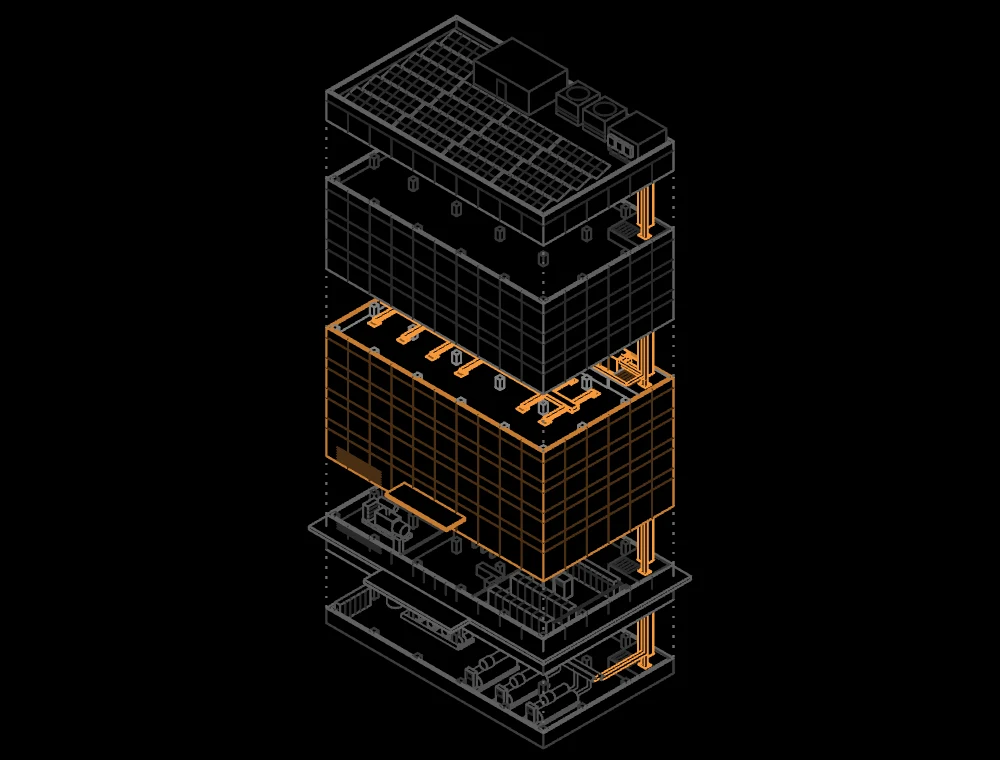
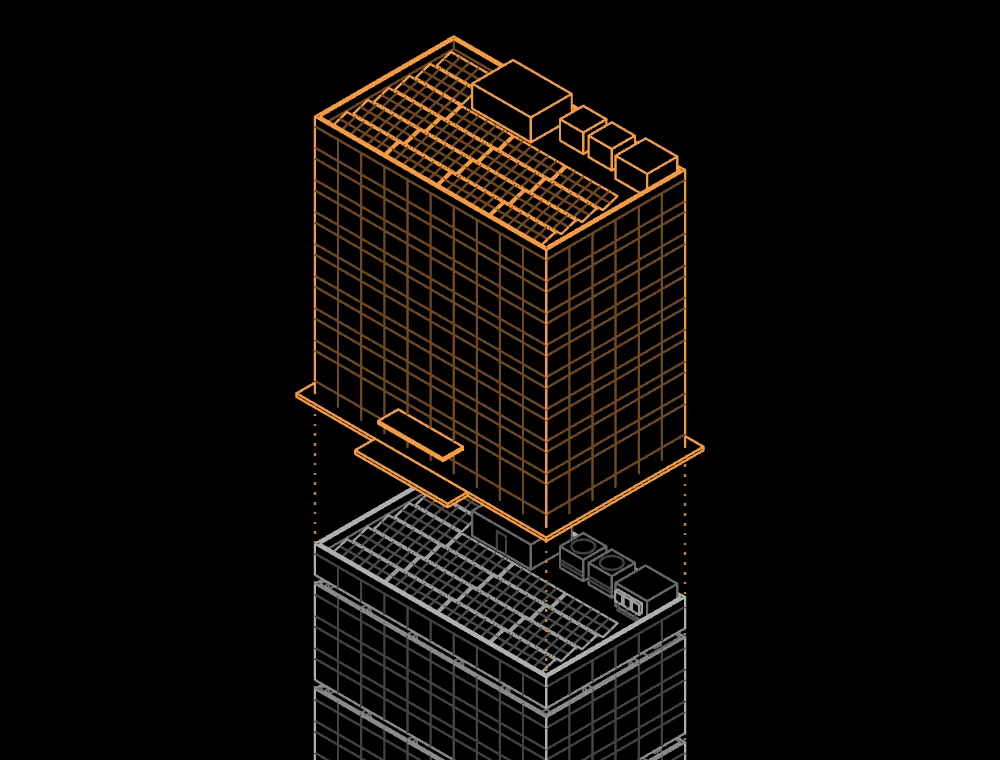
One model. Every system. Run to a single plan.
It uses live data from meters, sensors and the building management system, with the weather forecast, to run heating, cooling, ventilation and battery dispatch at the lowest energy and cost. It shows where equipment is faulty and which works would save the most.
Pick a system. See what changes.
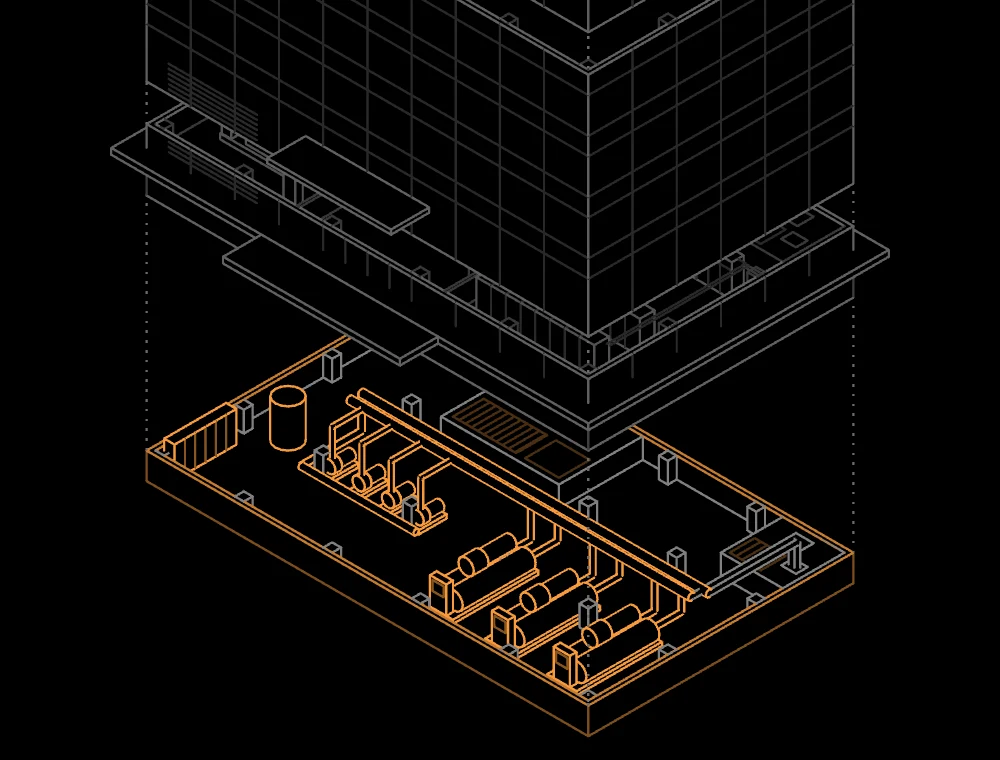
Chillers and cooling
Lower cooling bills, fewer breakdowns.
Knows what each chiller should draw at today's load and weather, and shows drift in rand, not as another alarm.
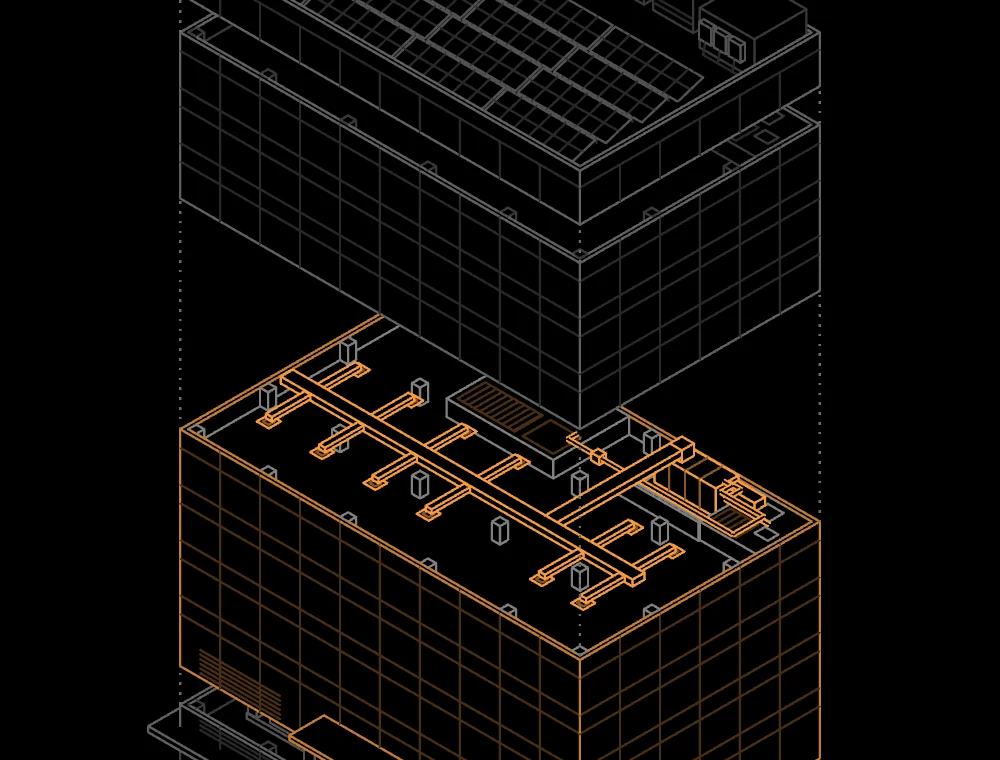
Air, heating and lighting
Comfortable floors that cost less to run.
Runs each floor by occupancy, weather and tariff, inside comfort limits you set.
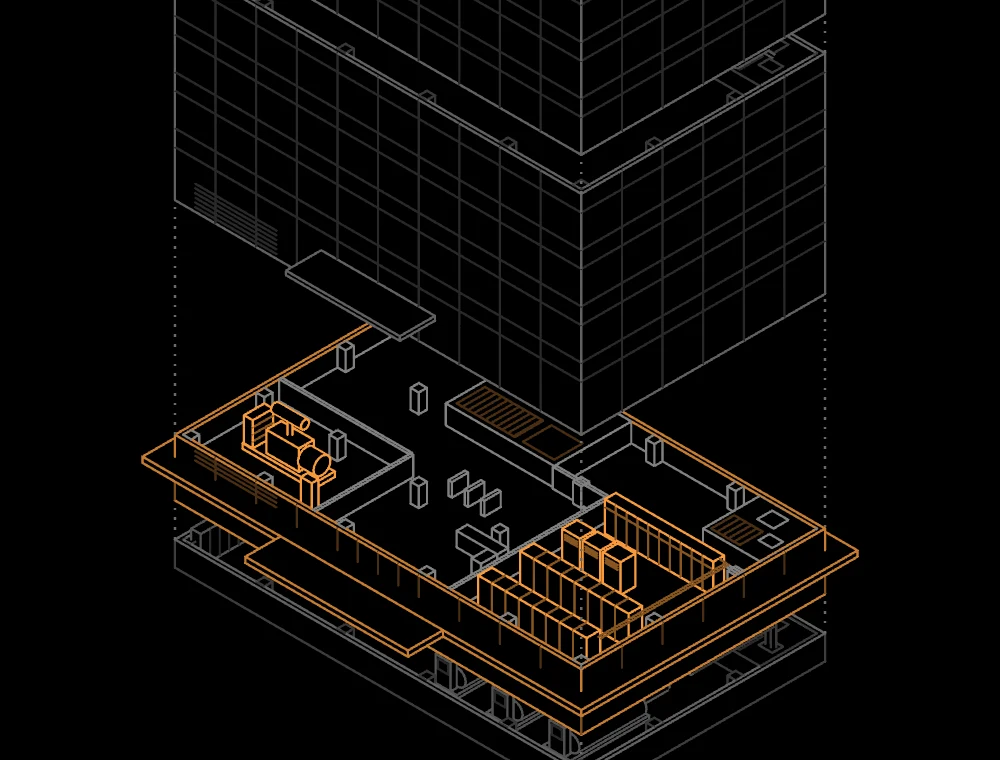
Batteries, meters and generator
One bad half-hour shouldn't set your bill for a year.
Plans the battery a day ahead to keep demand under your limit, and runs the generator only when it's really needed.
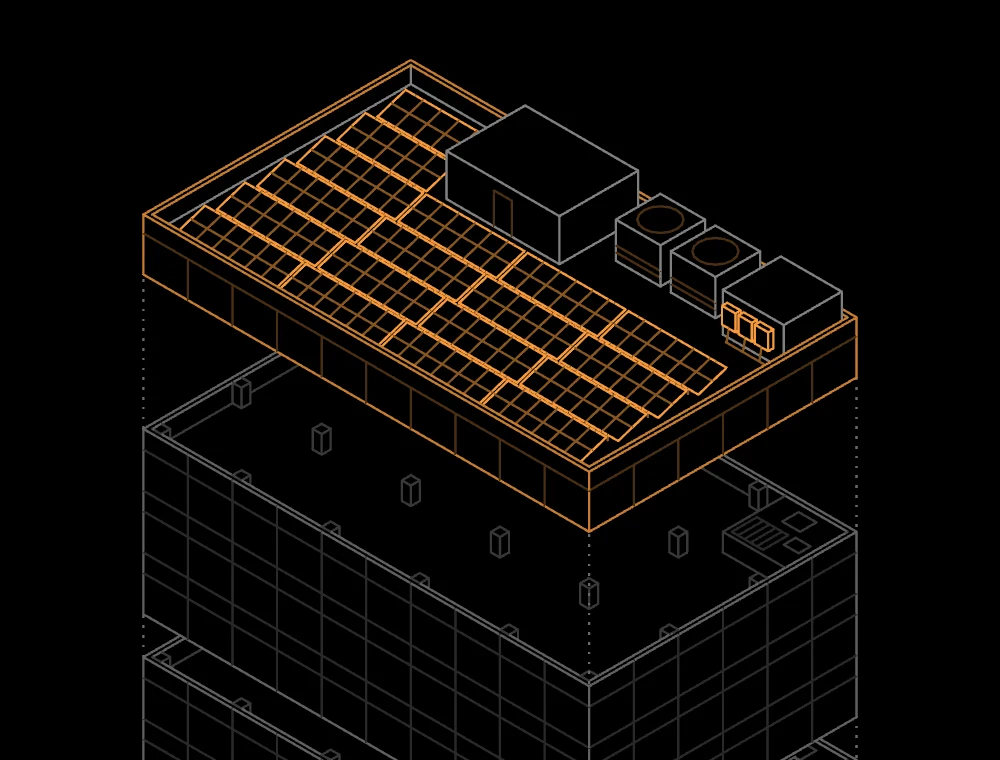
Solar and inverters
Use more of your own solar.
Measures what every panel and inverter produces, and forecasts tomorrow's demand, sun and weather.
Water quality
Know in minutes, not days.
Sensors read 25+ water quality parameters continuously, so nothing slips between lab samples.
Carbon and ESG
Carbon reports you can audit.
Energy, water and fuel reported in rand, kWh, kVA and carbon. Measured, not estimated.
EV charging
Charge more cars without raising your peak.
Schedules charging around the building's peak and the tariff hours.
No guesswork. Every decision starts from a measurement.
Three things happen, every day, in the same order.
-
Measure
Reads every meter, sensor and machine through the systems you already have. Where a reading is missing, a meter is added.
-
Optimise
AI forecasts each site's demand, solar output and weather a day ahead. Plans heating, cooling, ventilation and battery dispatch for the lowest energy and cost, inside the comfort limits you set.
-
Verify
Reports the result against a measured baseline, in rand, kWh, kVA and carbon.
BaselineMeasured
Rand
kWh
kVA
Carbon
Your engineers see problems first.
What's running, what's drifting and what to do next, in rand. Override is always there.
Savings so far
Against the measured baseline.
Today's plan
Hour by hour, against what actually happened.
Anything drifting
Ranked by what it is costing you.
It works with the plant and systems you already have.
The twin sits on top of your building management system. Nothing is replaced, and your team keeps authority over set-points and schedules.
Building management system
Reads the points your BMS already has. No controller firmware is changed.
Meters and sub-meters
Uses your metering, and adds sub-meters on the central plant where they are needed.
Solar, batteries and inverters
Reads production and state of charge to plan the day.
Weather forecast
Brings tomorrow's weather into today's plan.
The twin
One plan for the day
Heating, cooling, ventilation and battery dispatch, at the lowest energy and cost.
You stay in control at every step.
-
Starts read-only.
The first connection has no control path into your systems.
-
Your security team signs off.
They review the connection before anything connects.
-
Nothing runs unapproved.
It acts only on the scope you approve, and every action is logged.
Override, always.
Your engineers can take over at any moment.
Know in minutes, not days.
Sensors sit in the water and read every second, so nothing slips between lab samples.
25+ parameters, including these five
Illustrative
pH
7.4
Range 6.5 to 8.5
Conductivity
412µS/cm
Below 900
Turbidity
0.4NTU
Below 1
Free chlorine
0.6mg/L
Range 0.2 to 1.0
Temperature
19.2°C
Below 25
Three kinds of alarm, sent by SMS and email
-
Threshold
A reading crosses a limit you set.
-
Sudden change
A reading jumps faster than it should.
-
Fluctuation
A steady reading starts to swing.
Find out what your building could save.
A site assessment starts with a survey and ends with a measured baseline.
Book a site assessment